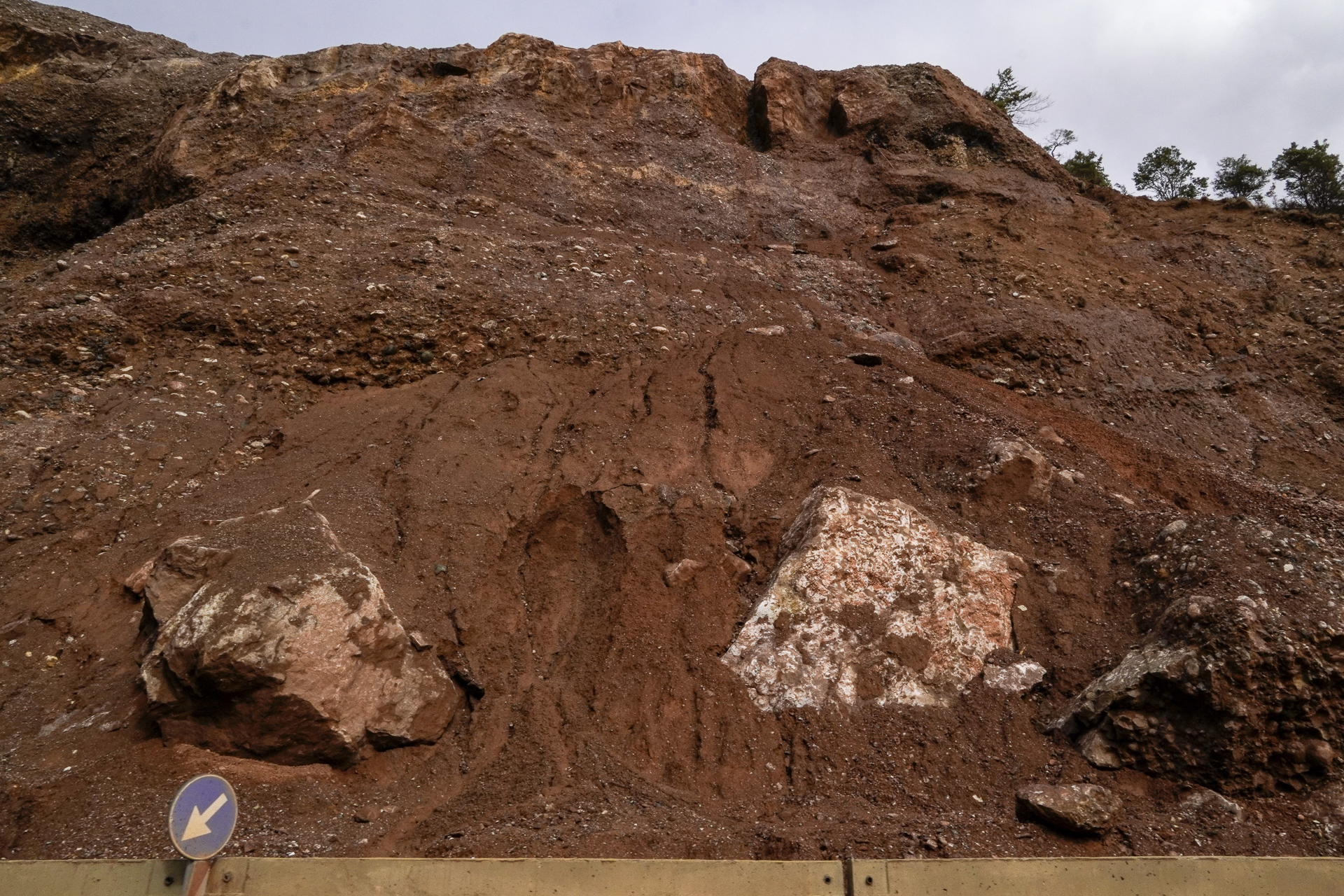
A week after the landslide at the Dragostunja turn, Faktoje.al documents from the ground the traces of the collapse that endangered the life of a family and blocked one of the main segments towards the southeast.
Esmeralda Topi
“God protected us.” This is how Safet Duka begins his story, a week after the mass of stones broke off on the Dragostunja bend, in the Librazhd-Prrenjas segment.

“I was taking my mom to visit. I saw small rocks falling. Little by little… then I realized the whole mountain was sliding,” Safeti recounts. “I stopped and ran back. If I hadn’t run, it would have caught us down.”
His car was hit by small rocks. The front window and the metal sheets were damaged. “If those big ones had fallen, we wouldn’t be alive today,” he says.
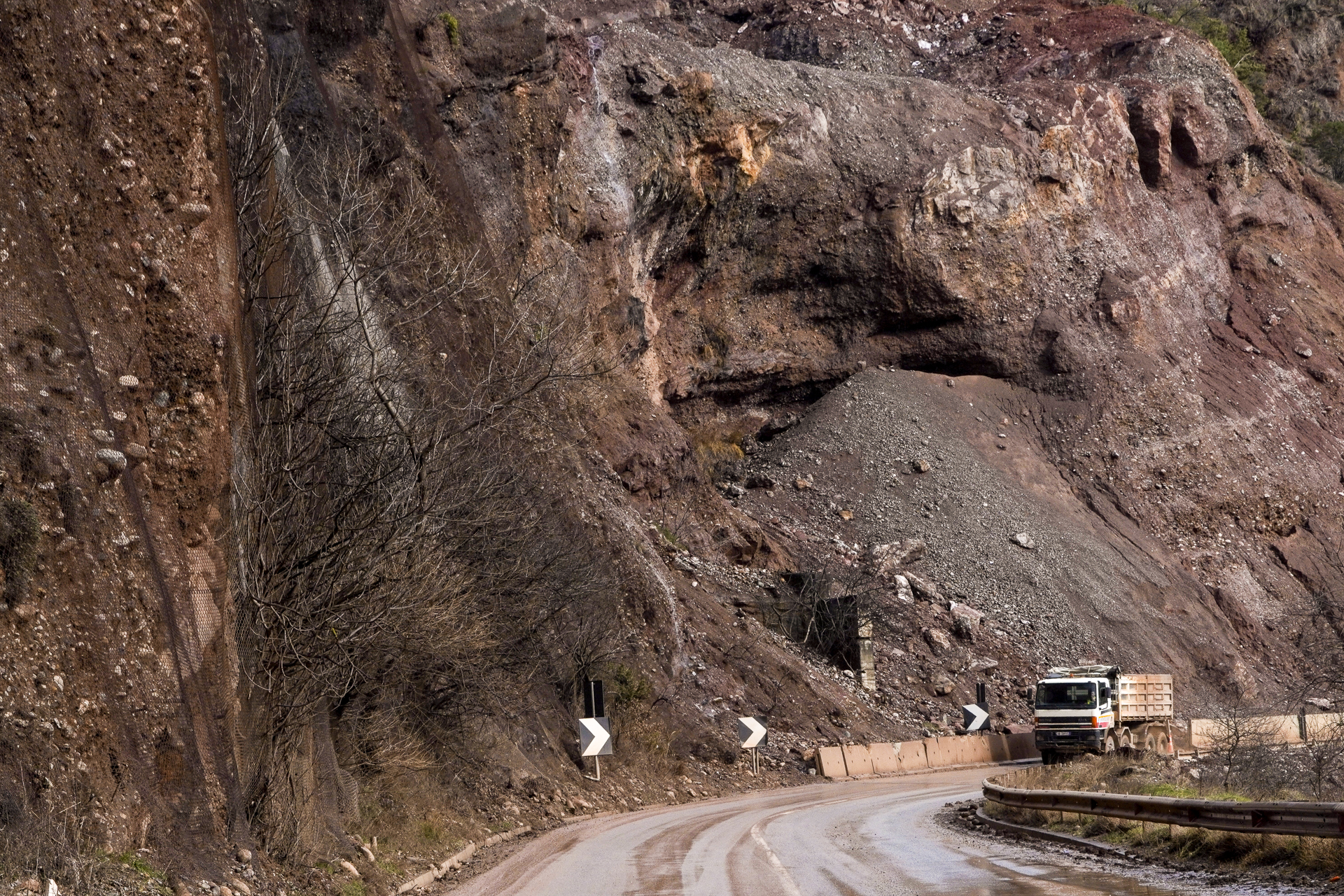
A week after the collapse, the road was open, but the signs were still there. Vehicles passed slowly because fear cannot be cleaned like stones.
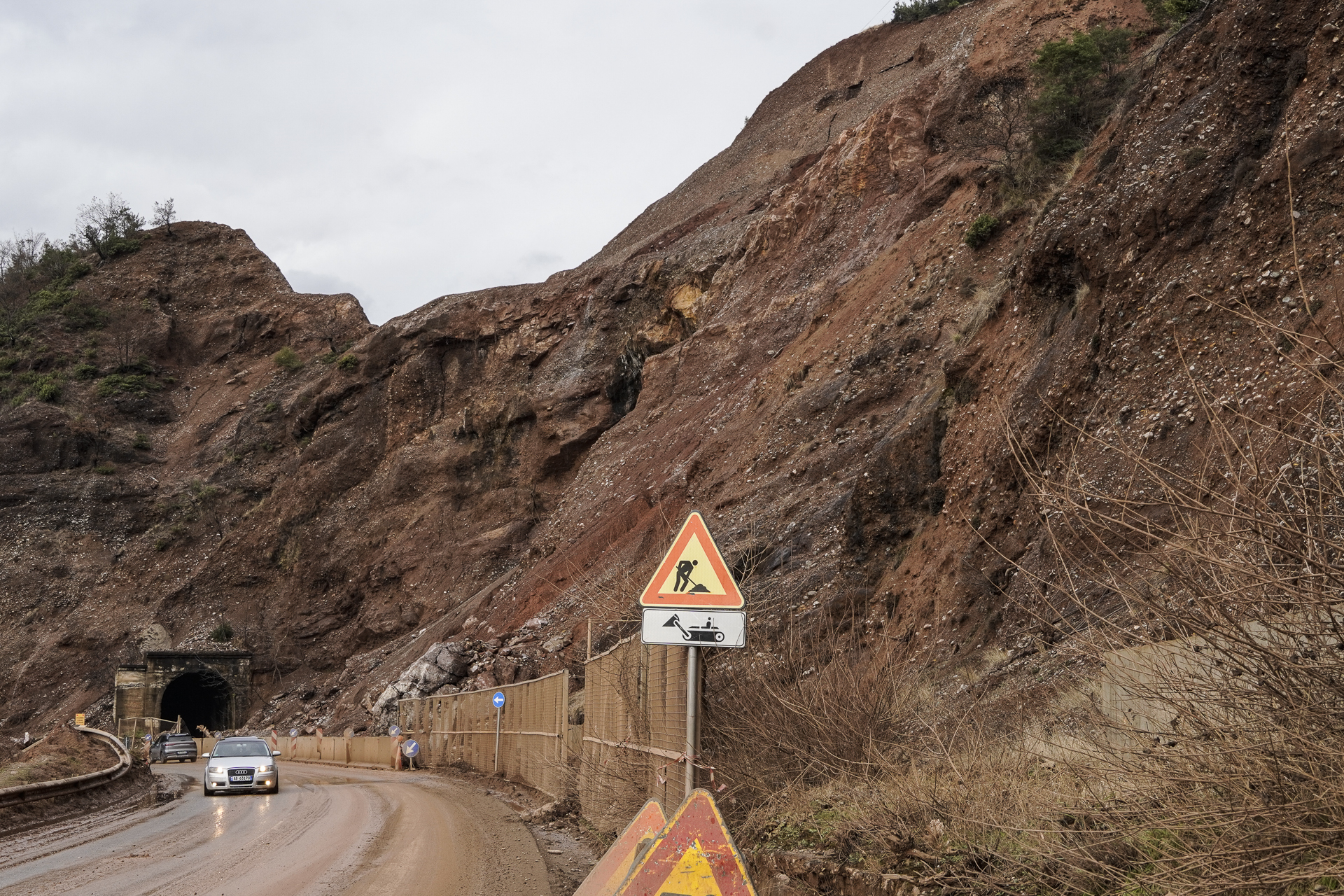
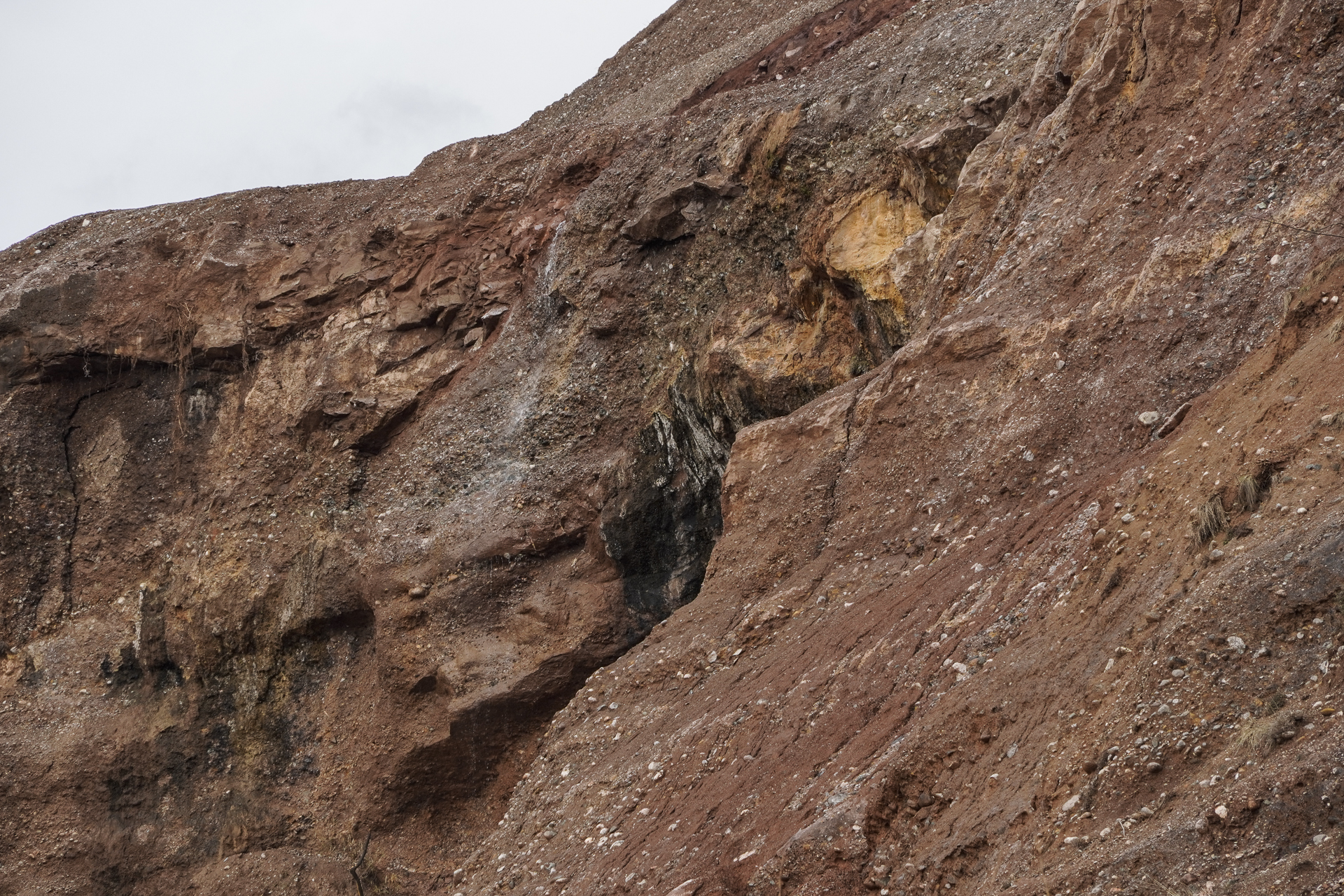
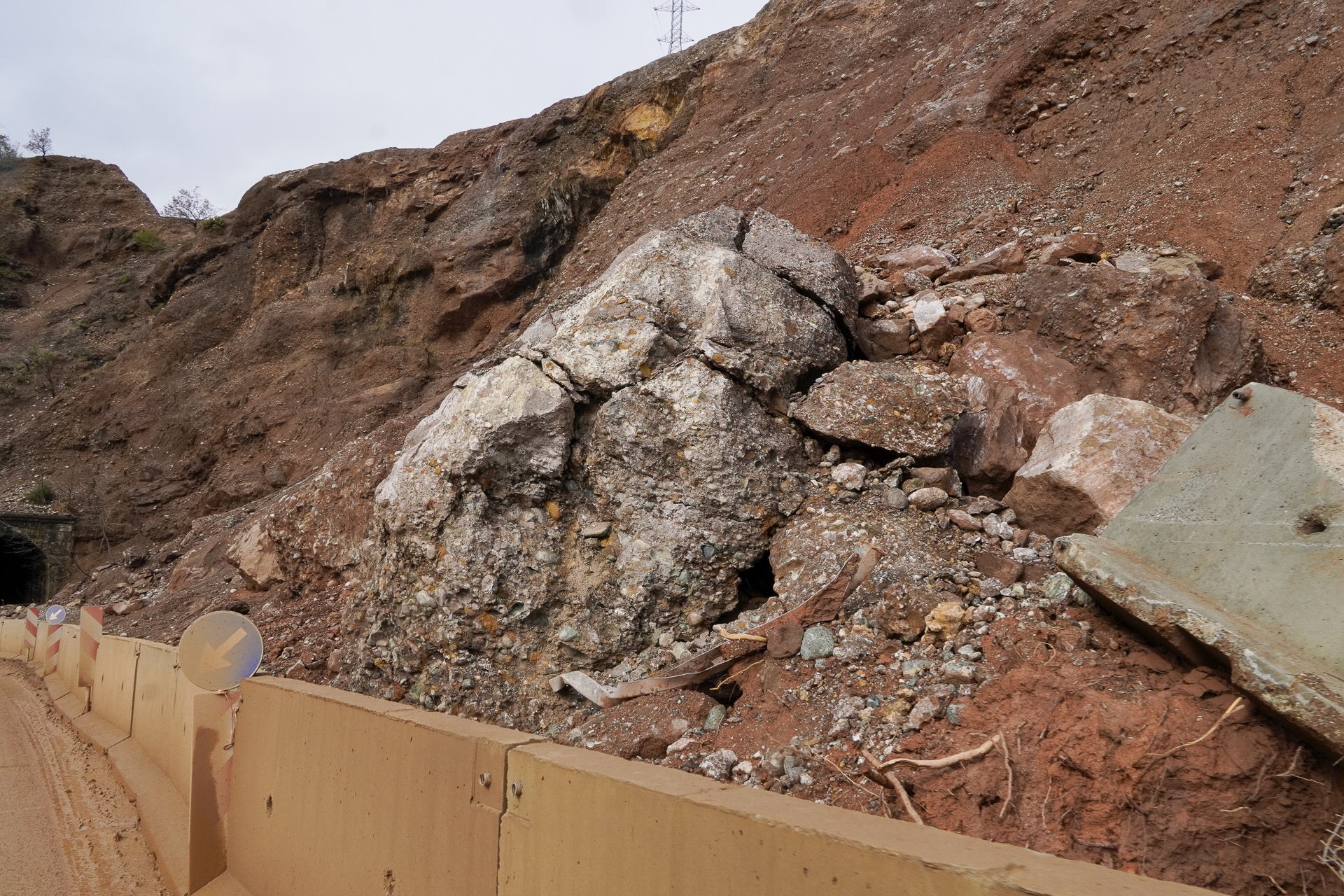
The rock rose bare above the road. Its cracked face, streaked with soil and gravel, looked as if it could slip again at any moment. A stream of water could clearly be seen flowing between those cracks.
Below, the road had narrowed and was covered in reddish mud. On the side of it, a triangular sign warned of construction work.
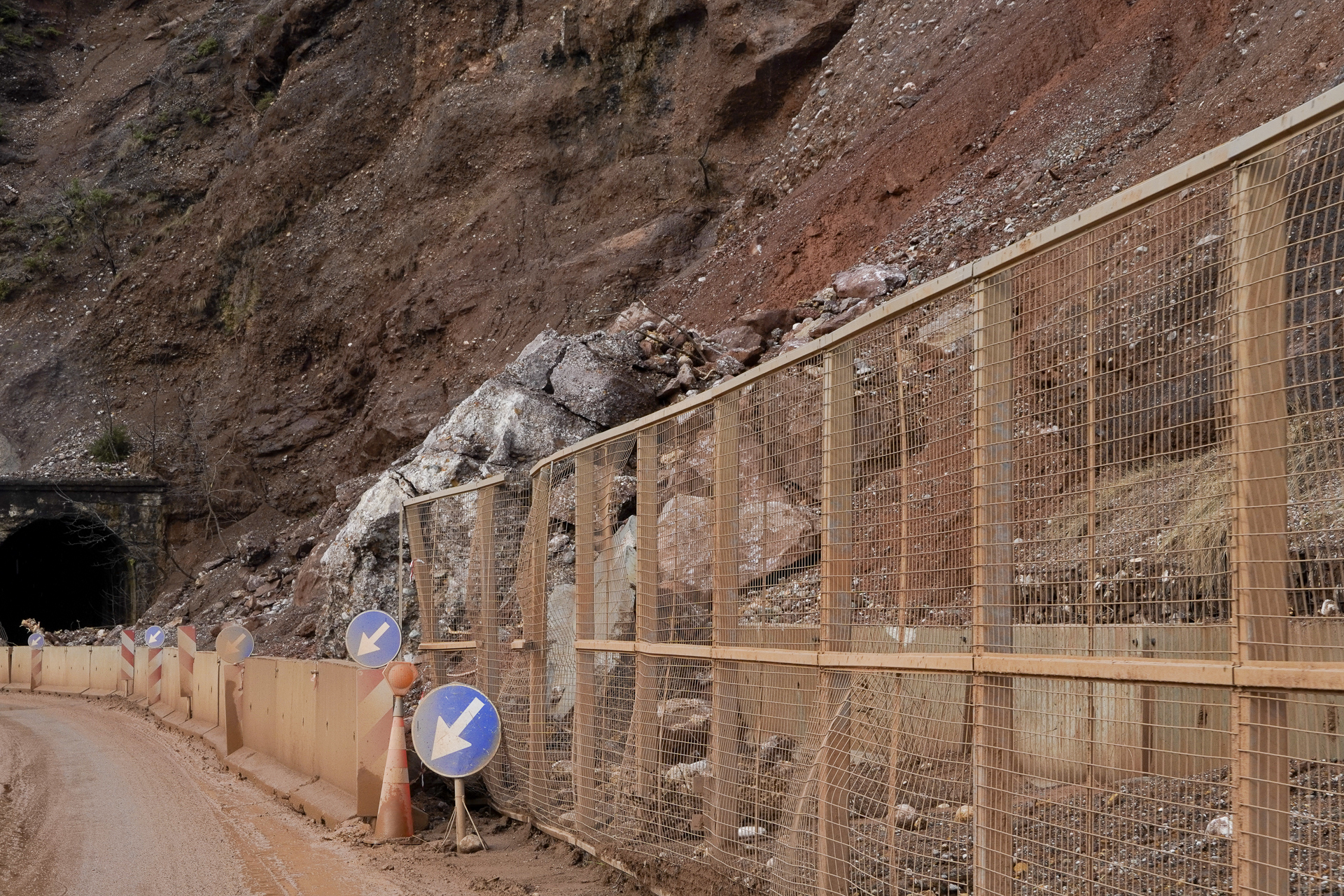
Protective nets had been placed along the escarpment, in an attempt to hold in place what nature had unleashed. But up close, you realized that it was more of an emergency measure than a final solution.
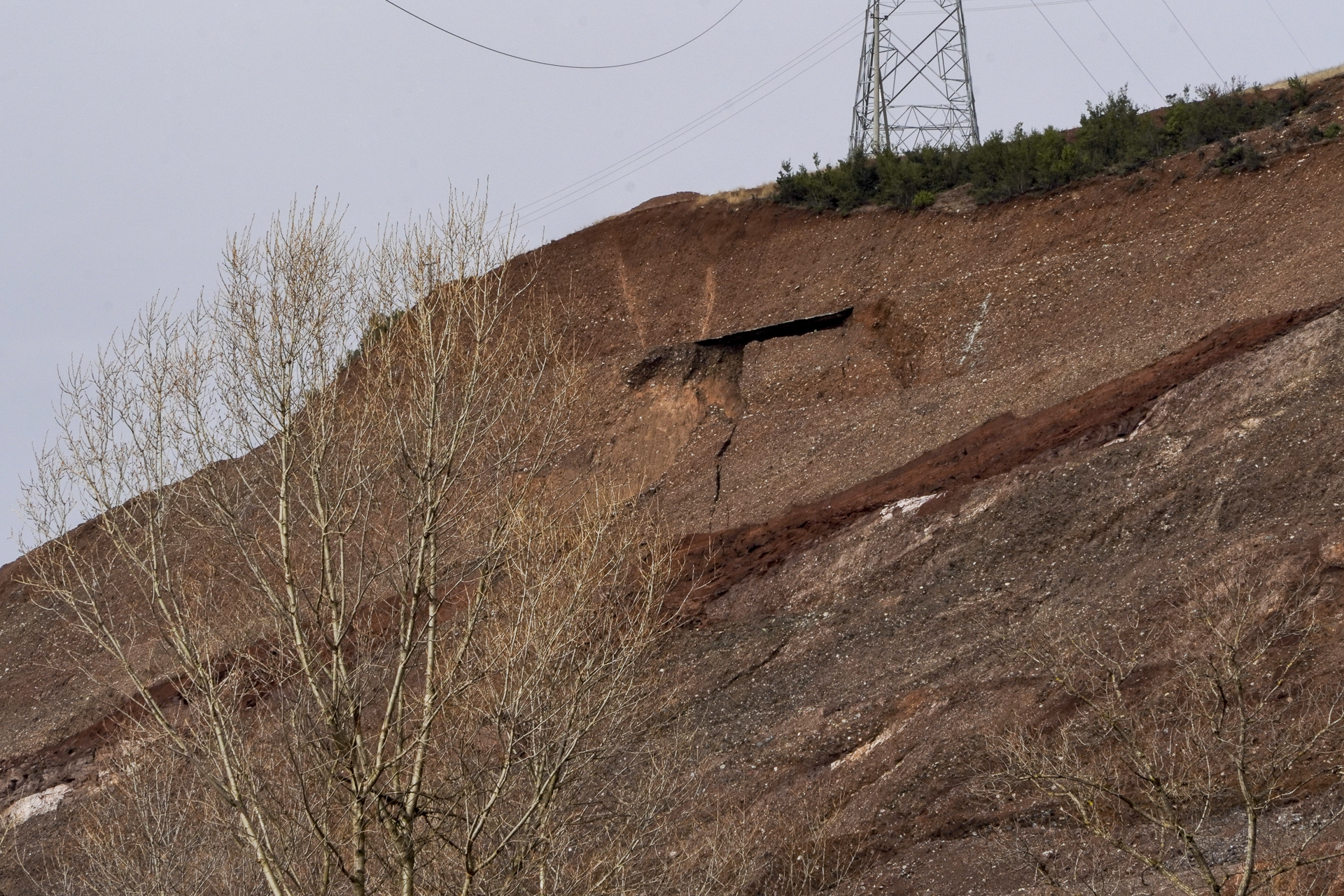
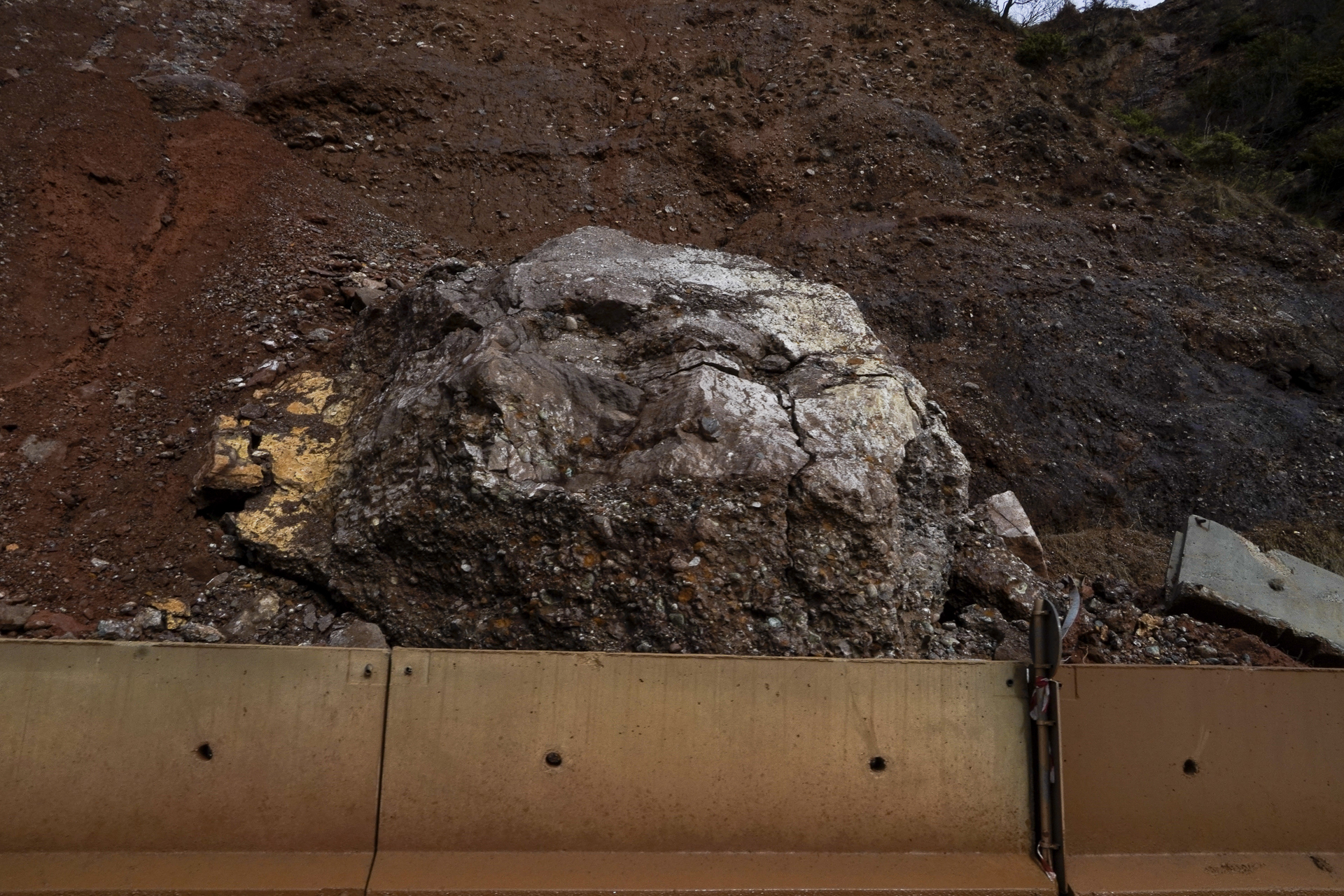
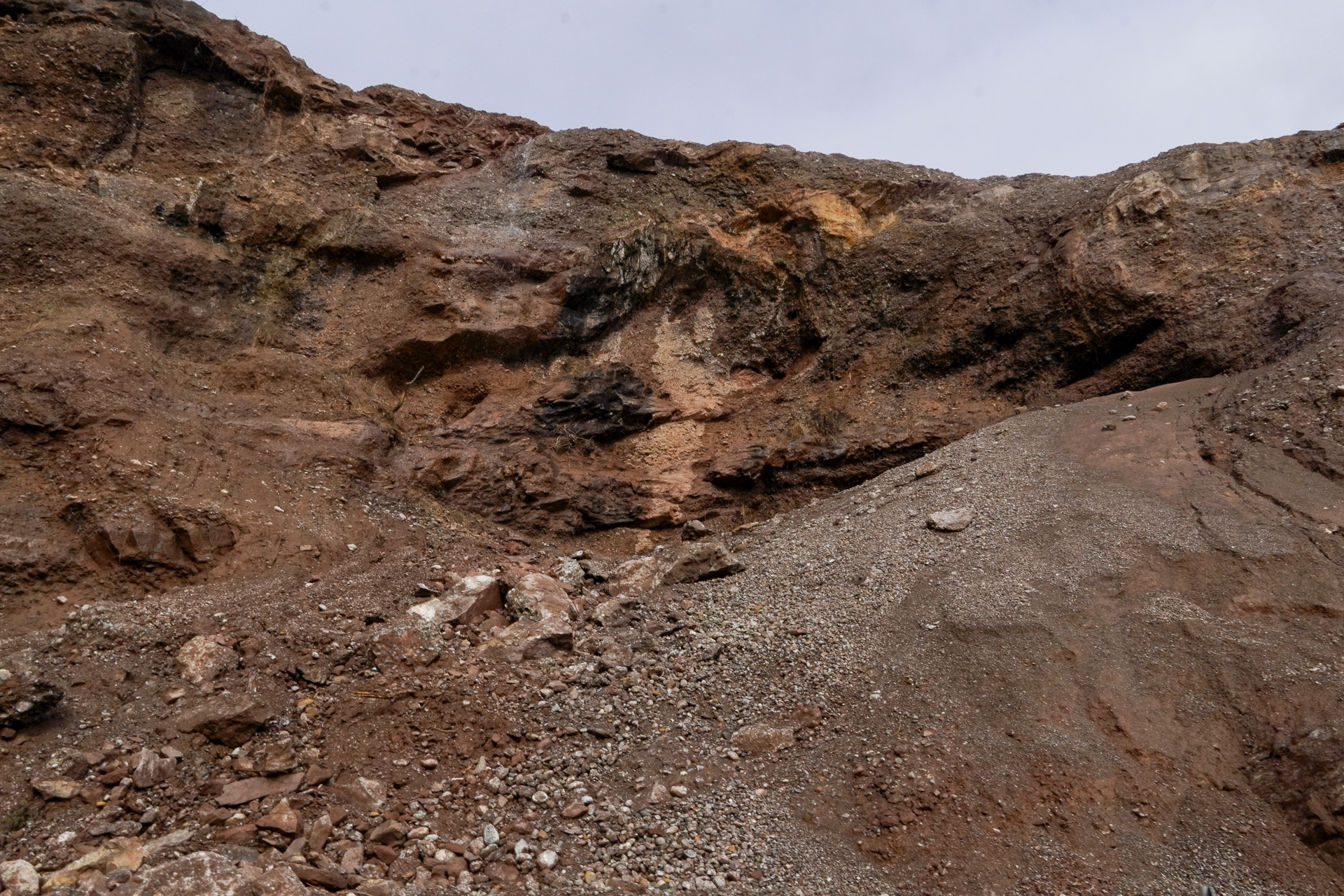
Even though it was raining, work continued on this cracked slope for Corridor 8.
“It has nothing to do with Corridor 8”
The Albanian Road Authority (ARRSH) tells Faktoje.al that the cause of the collapse of the road at the Dragostunja bend was “the increased presence of surface and groundwater, as a result of heavy rainfall in a short time.”
According to the ARA, the situation “has no connection with the Corridor 8 works.”
But on the ground, this is not the only explanation. On the eastern side of the road, above the existing line, work continues for Corridor 8. Even on Monday, February 9, the day we went to the ground, the machinery was working.
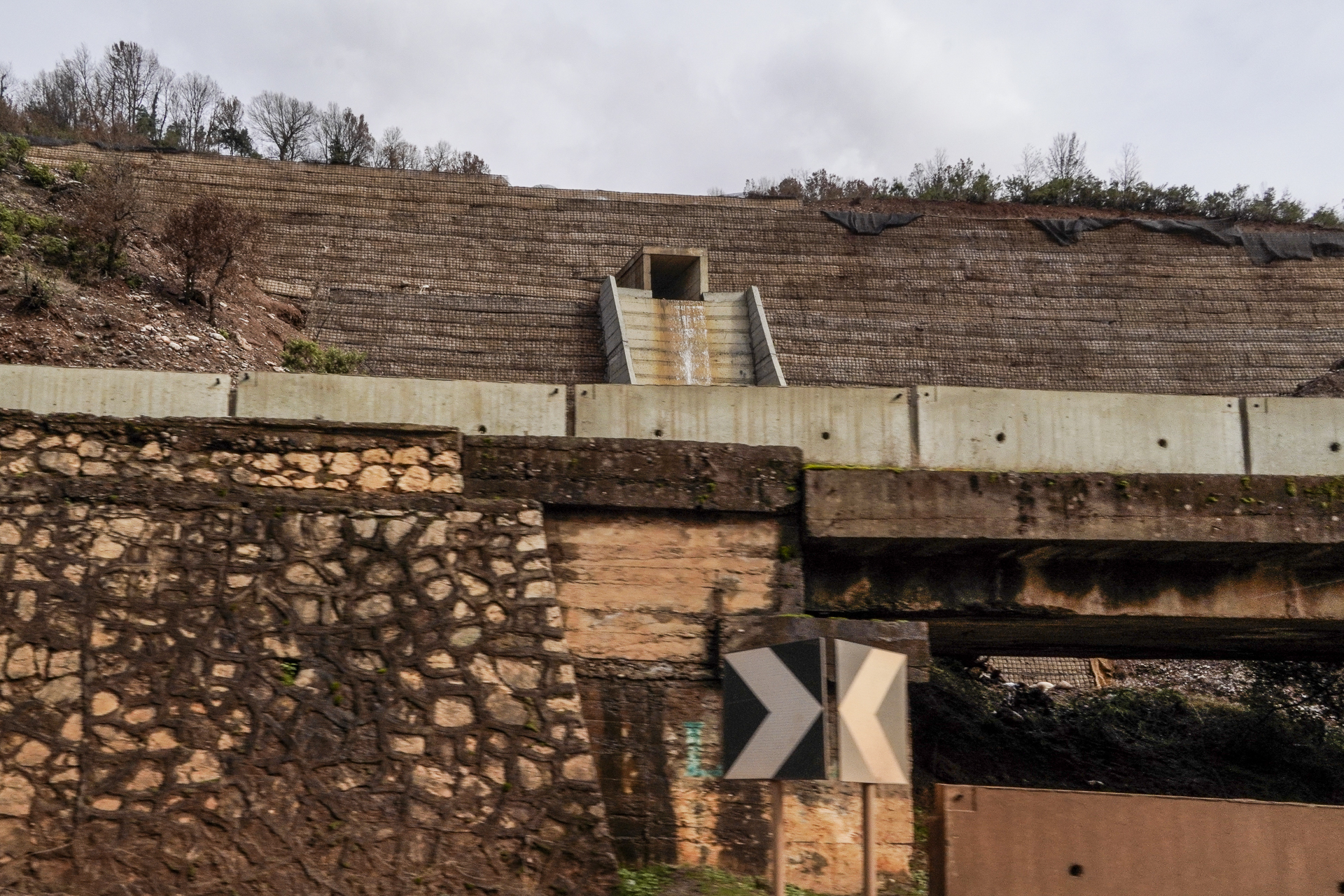
“The human hand”
“From what it looks like, the collapse is related to the works being carried out above the existing road,” says surveying engineer Romeo Nazarko.
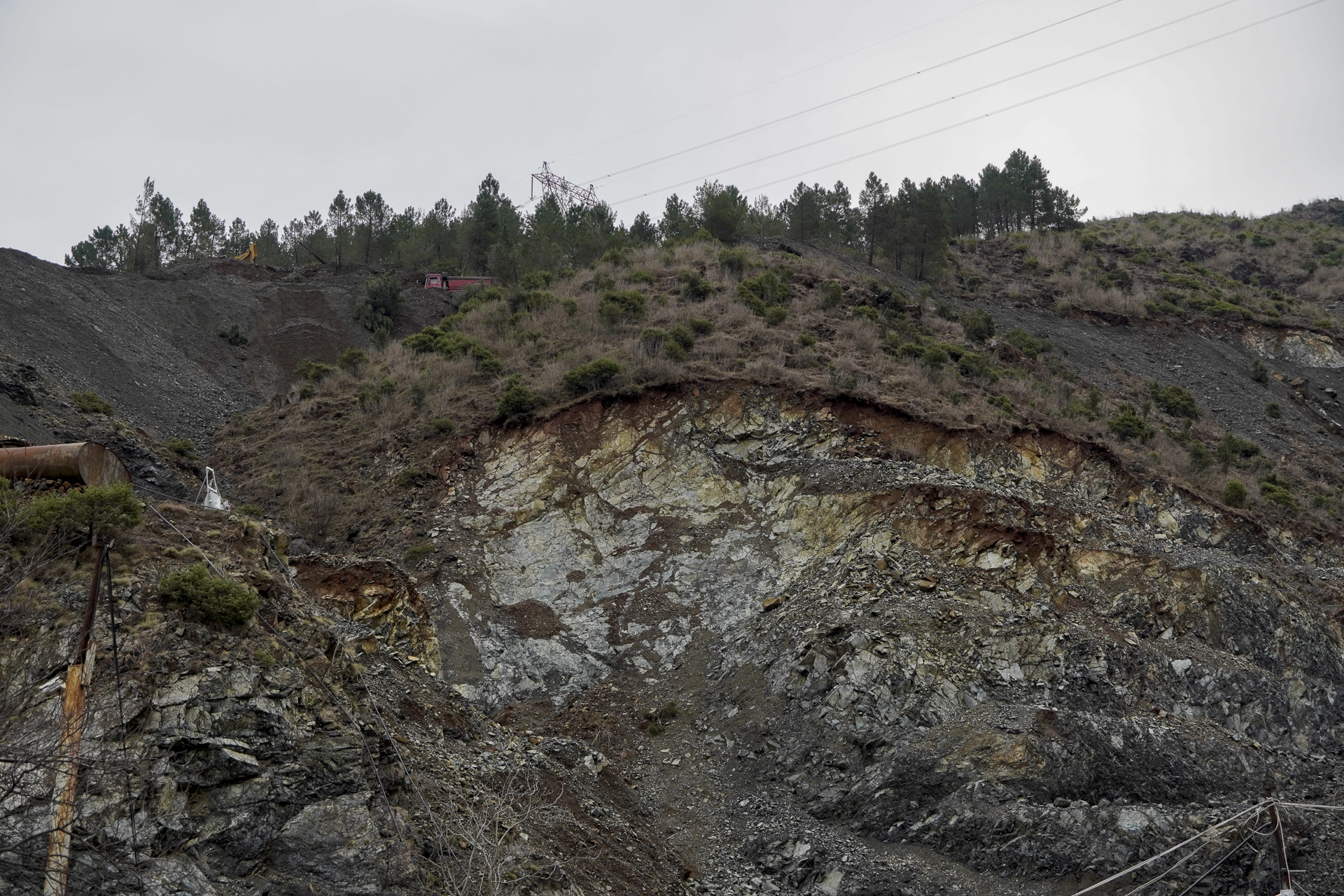
“The works on the massif have divided the rocky part into two parts. The part below the corridor segment, detached from the foundation, from the tremors and the rains that have entered the created spaces, has provoked the collapse,” he further argues.
According to him, surface and groundwater “are not the main cause.” “There are landslides from water every year. But this was not a routine landslide. It was provoked by human intervention.”
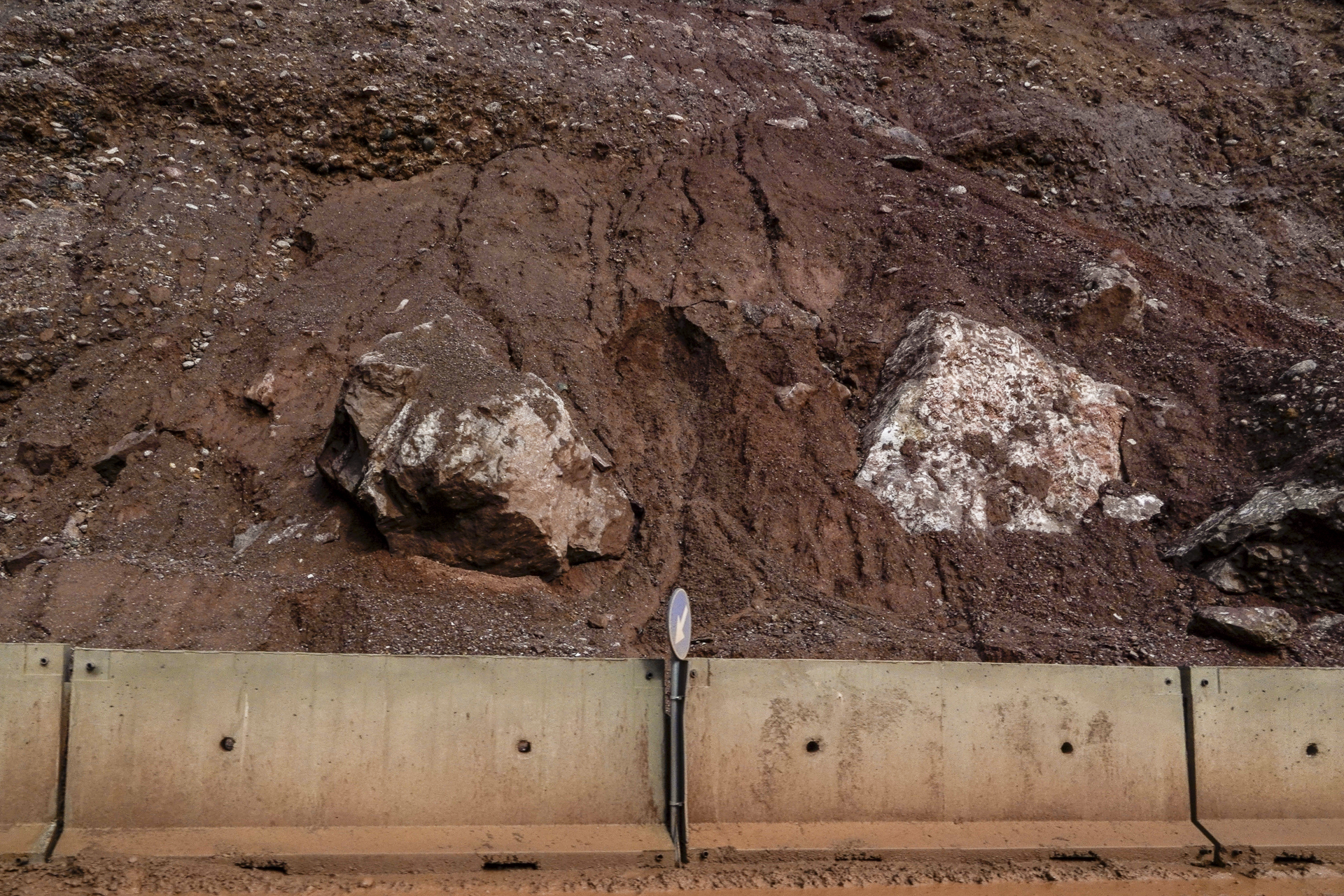
Safet Duka and his wife share the same opinion. “It rains every year,” says Luiza, Safet’s wife. “But the road has never rained like this.”
“They work up high with holes. They’ve created cracks. The rain finds a place and gets in,” Safeti adds.
Engineer Nazarko warns that the situation “may be repeated in other segments due to the terrain”. According to him, continuous monitoring and detailed control of the stability of the massif are needed. “When you intervene in such terrain, you must know that every excavation, every vibration, changes the natural balance. If it is not monitored continuously, the risk remains,” he concludes.
A lot of money but little quality
The Librazhd–Prrenjas segment is one of the main traffic nodes towards the southeast. Any blockage of this axis is more than a local incident. It is the interruption of a corridor.
“Repeated collapses are an indicator of an inefficient economic model,” says expert Eduard Gjokutaj. “Too much money for construction, too little for quality.” According to him, roads should be treated as long-term assets, not as projects that end with an inauguration.
“A road should not be measured by the kilometers inaugurated, but by the years it operates without blockages and without danger to life,” he emphasizes. Every blockage, Gjokutaj adds, is a “hidden tax” paid by citizens in time, fuel, and stress.
***
“God saved us,” Safet repeats at the end. In his hands he holds the license plate of the car, found among the stones and mud the day after the collapse. He wipes it with his hands, turns it slowly, as a testament to what could have been much more than material damage. A few seconds separated an incident from a tragedy. Safet Duka and his mother were lucky. Next time, luck may not be enough.
