
A hearing that was supposed to be a dialogue turned out to be a monologue. In Divjaka, a farmer asked for just one minute to talk about the plight of survival, facing a prime minister with a microphone and an “open” economy that protects no one.
Esmeralda Topi
In Divjaka, one of the most fertile areas of Albania, the government had gone to listen to the farmers. At least that’s what was announced.
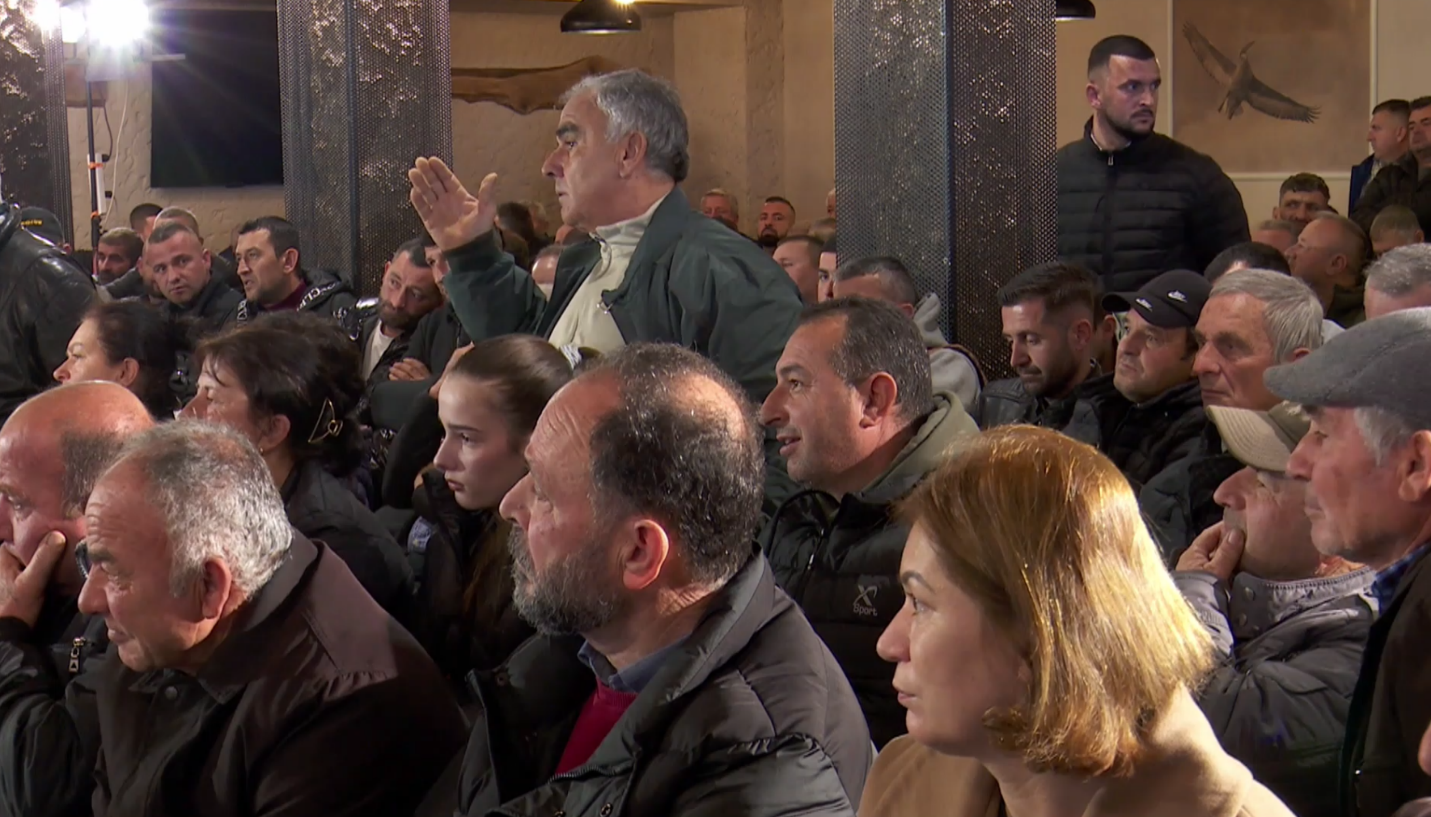
The hearing on the National Scheme 2026 was supposed to serve to build a picture of the needs on the ground. But what happened in the hall was completely different. A long monologue by the government in front of hundreds of farmers who were waiting for their turn to speak.
The speeches began with the political leader of the district, continued with the mayor, the Minister of Finance, the Minister of Agriculture, and concluded with the Prime Minister.
The meeting was interrupted several times by a farmer’s voice, barely audible from the hall. “Hey, protect us!”
The same one who stood up as soon as the prime minister announced that he had to leave for another engagement. “I understand, you don’t like the information!” he said.
“You don’t understand us well, so don’t start from the opposite,” the prime minister replied.
“We’re worried, we’re not happy…”, said the farmer, still without a microphone.
“Listen, I understand very well…”, Rama continued.
“There are no personal connections, nor am I involved in politics…”, the farmer tried to explain.
“I am doing politics for myself,” the prime minister replied.
“No, don’t misunderstand me, please listen to me… as far as I understand, you’re not getting the correct information…”
“How do you know that?” Rama asked.
“If you had the correct information, you would say that we were right from the first word”
“Why did I tell you you’re wrong? You haven’t spoken yet,” the prime minister interrupted.
The farmer turned to the audience: “One minute, one minute, I’m up now. I’m a farmer. I work 8–10 hectares of land, times two it becomes 20 hectares. We are the most vulnerable class in Albania.”
“But what for?” Rama intervened.
“Let me explain. We told the Minister of Finance when we gathered for a political campaign: protect us because goods are coming in from abroad.”
“This doesn’t exist,” the prime minister interrupted.
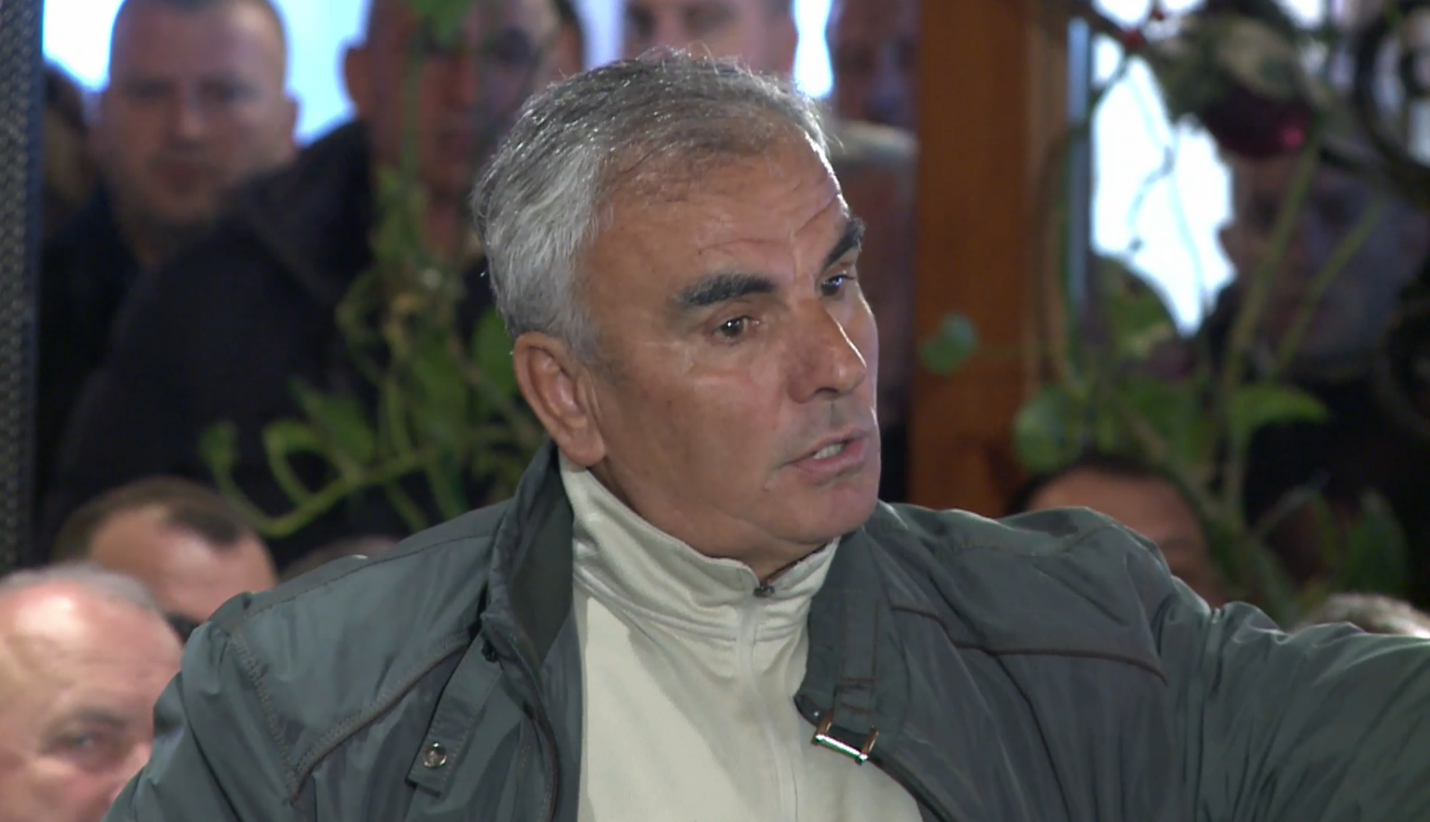
“You want to monopolize the commodity, he told me. Which is not true…”, the farmer continued.
“Please…”, said Rama.
“I have respect, but I will speak because I am in trouble. The President knows very well, Mr. Prime Minister, that we take the goods without liquidation…”
“My friend, I have a very big problem: no one can impose themselves on me by force,” said Rama.
“You don’t have to force yourself on others to speak if you want to. Sit down, sit down. There is a turn and there is politeness. The floor is not taken with difficulty.”
“Hey, I’ll support the family, because I can’t support it with words,” the farmer was heard saying.
“There are 500 people here,” Rama said.
“They have the same problem,” came the reply.
“Listen to me now. There is no such thing as closing product borders in an open economy. Do you understand?”
The debate continued until Rama closed it: “Let’s not prolong this conversation because it’s useless talk. Closing the borders so you can sell your goods, that doesn’t exist.”
“Okay… we don’t have the strength,” said the farmer, shrugging his shoulders, resigned.
The Prime Minister left, the signal was cut off. The hearing ended with the only farmer expressing his concern, who said he shared it with the 500 others who were there and applauded as the Prime Minister left.
Conclusion
The hearing in Divjaka is an example of how propaganda can mask reality. What was supposed to be a dialogue about the needs of farmers turned into a monologue of power, where the voice of those who produce food was not heard. The farmer who challenged the microphone rule and asked for only one minute to speak, did not manage to change the decisions, but became a symbol of the plight of an unprotected layer. The one that propaganda tries to hide. At least publicly. As far as we heard, we saw it with open doors.